Home /Guides /Not One Stay Says Bonenkai: Pick a Year-End Group Stay by Numbers, Not Words
Not One Stay Says Bonenkai: Pick a Year-End Group Stay by Numbers, Not Words
Once December starts, someone brings it up. Where are we doing it this year.
There are a few groups a year you do not want to lose to a two-hour slot at an izakaya. So you think, we could just stay the night, and you start looking at private rental stays. Take the whole house and you can drink without watching the clock, then go to bed.
And then you search for bonenkai, and nothing the stays say lines up with it.
Not one of 642 says bonenkai
We searched the full text of all 642 listings on Tomaribi: descriptions, plan names, room notes. Here is the result.
| Word | Stays |
|---|---|
| Bonenkai (year-end party) | 0 |
| Shinnenkai (new-year party) | 0 |
| After-party | 0 |
| Farewell party | 0 |
| Social gathering | 0 |
| Banquet hall | 1 |
The one banquet hall belongs to Healthy Pal Akagi in Gunma, a property with a restaurant, a banquet hall, a meeting room and karaoke all under one roof. Its glamping unit sleeps four. The single point where banquet-hall culture meets the private rental stay has a capacity of four.
What they do say is training camp
They are not turning groups away. They use other words.
Ten say gasshuku, a training camp. Capacities run from four to 25, and the larger ones genuinely mean it. Stella Yatsugatake Haramura in Nagano has eight rooms sleeping up to 24 and a 1Gbps line, and says it works for training camps and remote work. The No.10 Forest Haven Villa in Chiba sleeps 25. Rinku no Yado MARUYA Izumisano in Osaka has six rooms plus a shared space for everyone, and describes itself as the scale used for training camps and company offsites.
Four say kenshu, corporate training. Karuizawa House Villa in Nagano offers a corporate camp plan and says it works as a venue for company training.
Five mention a party, and one of those is Beach SPA TSUDA in Kagawa, whose line reads: pets and party use are not permitted. One in five uses the word in order to say no.
Why they do not say it
Because what they sell is the place.
A ryokan banquet hall comes with an organiser, a seating order, staff coming in and dishes arriving in sequence. It sells the machinery of running the occasion, which is why a bonenkai plan can exist as a product.
A whole-house rental sells a key. Who comes and what they do is decided by whoever rents it. From the property’s side, a year-end party, a training camp and a class reunion are one use: a large group using one house. There is no reason to name them separately.
The same thing happens with names: only five call themselves a cottage and six a rental villa. The words searchers use and the words stays use were never the same set.
By headcount, 132
If words will not narrow it, numbers will. Start with the group.
| Sleeps | Stays | Share of 642 |
|---|---|---|
| 6 or more | 398 | 62% |
| 8 or more | 232 | 36% |
| 10 or more | 132 | 21% |
| 12 or more | 66 | 10% |
| 15 or more | 32 | 5.0% |
| 20 or more | 12 | 1.9% |
Around ten, the number most year-end groups land on, is exactly where it breaks. Going from eight to ten cuts 232 down to 132, and twelve halves it again to 66.
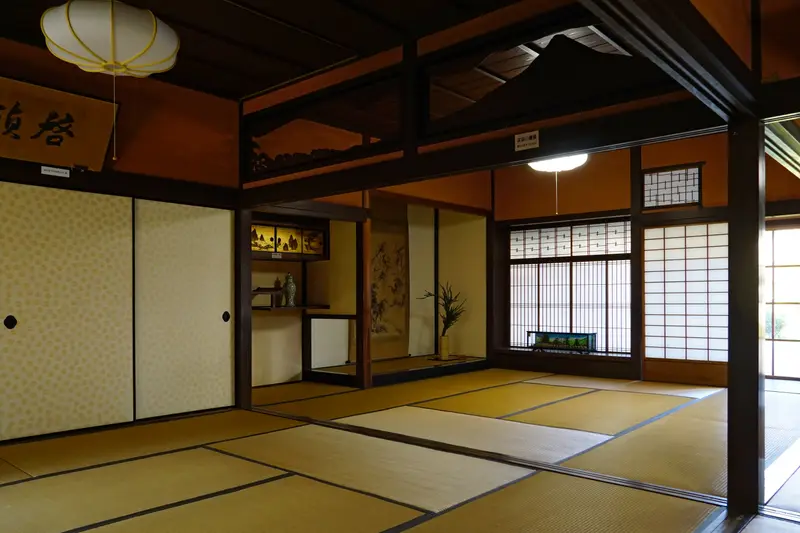
Of the 132, 88 are villas and 44 are glamping. By the time you reach the 12 that sleep twenty or more, you are at school-year numbers: Crystal Villa Shirarahama Beach in Wakayama at 32, Ishigaki Villa Siesta in Okinawa at 37.
The second round is not karaoke
This came out clearest of all.
Of the 132 stays that sleep ten or more, zero have karaoke.
Six listings mention karaoke in total. f.f.Vacation House Blue on Awaji Island has a karaoke room; Villa LUAR, also on Awaji, has karaoke too. But those six sleep four to eight, and not one of them overlaps with the large stays. Karaoke turns out to be equipment for small houses.
Here is what the 132 have instead.
| Of the 132 | Stays |
|---|---|
| BBQ facilities | 120 |
| Kitchen | 84 |
| Sauna | 81 |
| Mentions a fire pit | 30 |
| Projector | 13 |
| Karaoke | 0 |
Only 40 have neither a sauna nor a fire pit; the other 92 have one or the other. Hibiki Sauna Glamping in Fukushima has a large barrel sauna seating up to eight and futons for eight laid in a washitsu, and says it suits large groups and training camps.
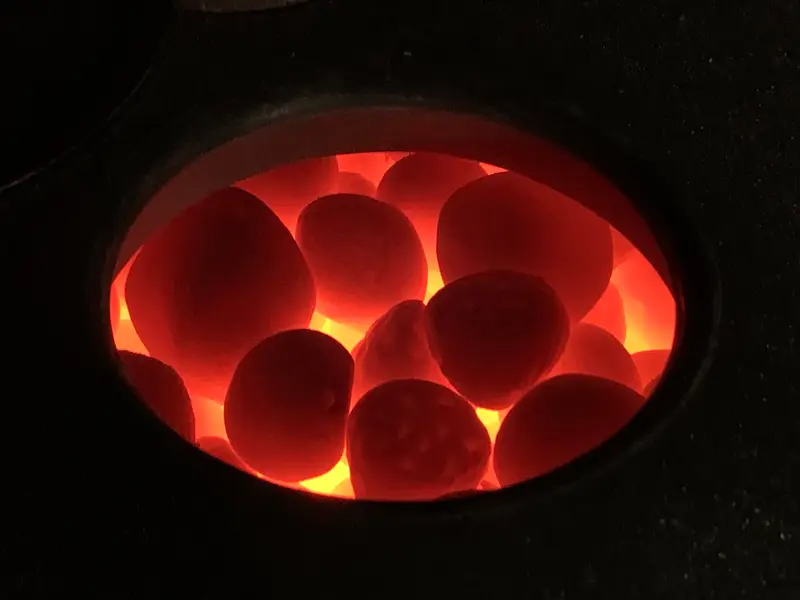
Instead of singing it out, you heat up and sweat it out. That is the shape the second round takes at a private rental. Thirteen have a projector, so putting something on the screen is an option too.
The bigger the group, the more you cook
This part was the surprise.
124 of the 642 mention a dinner-inclusive plan. Narrow to the 132 that sleep ten or more and it drops to 18. The more people you bring, the fewer the options for having it cooked for you.
What they have instead is a kitchen, 84 of them, and BBQ facilities, 120. At a large stay, dinner is something you cook rather than something you add on. If you want a night where you do not cook, you have to give up on the headcount first.
One pot for ten is its own kind of year-end party. It just needs someone to shop, someone to cook and someone to clean up. That is the real difference from an izakaya.
If you are drinking, settle the journey first
A year-end party involves alcohol. A private rental stay usually involves a car. Those two do not go together.
Of the 132 stays that sleep ten or more, exactly eight say ‘walk from the station’ in their access notes. Across all 642 it is 39. The starting point a stay names first is not a station but a motorway exit.
So the order reverses. Normally you pick the stay and then work out how to get there; for a trip built around drinking, a stay whose journey you cannot settle is not a candidate at all. Walkable from a station, pickup available, or somewhere a taxi will come. Clear that first and the 132 gets much smaller, and the thing you would have worried about on the day disappears.
Looking at the stays you can reach without a car first is the short route.
Crossing into the new year is a different stay
A year-end party and the new-year holidays are both December, but the conditions differ.
A year-end party is one night on a weekday or weekend, usually early to mid December. For a stay that carries you across the new year, the first thing to check is whether it is open at all, and the rates and dates belong to another world. Twelve people on Saturday the 13th and a night on the 31st are different searches from the start.
About these numbers
- The base is the 642 stays published as of October 2026 (310 villas, 332 glamping, duplicates excluded). Listings grow, so the counts are a snapshot
- Word counts are a full-text search across each listing’s description, summary, plan names and room notes. For kenshu, chef biographies such as ‘trained at a leading resort’ were removed by hand, leaving four
- ‘Dinner included’ counts listings whose text or plan names mention a dinner-inclusive or two-meal plan. It depends on how plans are written up, so more stays may be able to serve dinner than this
- Sauna, kitchen, BBQ and projector come from facility tags; capacity from figures confirmed in official information. Stays that do not publish a capacity are not in this count
- Karaoke, fire pits and ‘walk from the station’ were counted from the written text. A stay may have one and simply not say so
- Merging duplicate listings moved the base from 654 to 642, which is why some counts differ slightly from earlier articles
Why you leave the izakaya
The absence of the word bonenkai does not mean private rental stays decline the job. They take it on differently.
A banquet hall runs two hours for you. A whole house hands you nineteen and does nothing else. One night is only nineteen hours, but it is a different length from an izakaya’s two. The food, the second round, the ride home: you decide all of it.
More to decide, and still people you want to stay the night with. That is probably the right year-end party.
- Spending New Year as a Family: How to Choose a Private Stay That Is Open
- Five Call Themselves a Cottage, Six a Rental Villa: The Words Stays Do Not Use
- “Walk from the Station” Is 41 Stays: How Access Notes Expect You to Arrive
- Private Stays You Can Reach Without a Car: 21 with Station or Airport Pickup
- The Night You Do Not Cook: Choosing a Whole-House Stay with Meals
FAQ
- Can you hold a bonenkai at a private rental stay?
- You can, but the stays themselves never use the word. Searching all 642 listings, bonenkai, shinnenkai, after-party, farewell party and social gathering all come back at zero. Only one mentions a banquet hall. What they do say is gasshuku (training camp), ten of them, and kenshu (corporate training), four. They are not refusing groups. They name the occasion differently.
- How many people can stay?
- 132 stays sleep ten or more, 21% of the 642 listed. Twelve or more drops to 66, fifteen or more to 32, twenty or more to just 12. The largest is Ishigaki Villa Siesta at 37. Of the 132, 88 are villas and 44 are glamping.
- Is there karaoke for the second round?
- Not in a single one of the 132 larger stays. Six listings mention karaoke across the whole catalogue, but they sleep four to eight, so they never overlap with the large ones. What the 132 have instead is a sauna (81) and a mention of a fire pit (30). Only 40 have neither.
- Can meals be included?
- It gets harder as the group grows. 124 of the 642 mention a dinner-inclusive plan; narrow to the 132 that sleep ten or more and it falls to 18. What they have instead is a kitchen (84) and BBQ facilities (120). At a large stay, dinner is something you cook rather than something you add on.
- If we are drinking, how do we get there?
- Decide that first. Of the 132 stays that sleep ten or more, only eight say 'walk from the station' in their access notes. Across all 642 it is 39. The rest assume a car, a taxi, or a pickup from the property. For a trip built around drinking, settle the journey before you settle the stay.
Stays in this article

KaruizawaNagano
軽井沢ハウスヴィラ
A whole-house rental in Karuizawa that began in 2021 under the idea of a retreat for adults. Every house has a wood stove, and they differ by character: one with a sauna, one with a foot bath, one with a hinoki bath, one facing Mount Asama.
4 bd

IzumisanoOsaka
臨空の宿 MARUYA Izumisano
A large whole-rental property at Izumisano with six Japanese and Western rooms, shared space and two rooftop jacuzzis, sleeping up to nineteen from about 6,000 yen a head.

Mt. YatsugatakeNagano
Stella八ヶ岳原村(旧・貸切宿にんじん)
A whole-house rental at Hara Village in Yatsugatake. Eight bedrooms sleep up to 24, and a 1 Gbps fibre line makes it workable for retreats and remote work.
8 bd

福島県須賀川Official site
響きのサウナグランピング
A fully private, one-group-a-day sauna glamping for up to 25 guests in Sukagawa, Fukushima. It pairs a huge 10 m-diameter dome tent with a Japanese-modern cottage with a hinoki bath, plus an eight-person barrel sauna, cold plunge, dog run and campfire.
1 room types