Home /Guides /Forty-One Are Walkable From a Station
Forty-One Are Walkable From a Station
The access line for Kameyama Onsen Glamping in Chiba reads like this.
About 40 minutes by car from the Anesaki-Sodegaura interchange on the Tateyama Expressway. About 12 minutes on foot from Kazusa-Kameyama Station on the JR Kururi line.
The motorway exit that takes forty minutes to drive from comes first. The station you can reach in a twelve-minute walk comes second. That is not the order of distance.
Reading the access lines of all 654 stays listed on Tomaribi, there turns out to be a reason for what a property puts first.
A station is named 318 times. It is walkable 41 times
Of the 654, 538 publish an access line, or 82%. The other 120 give an address and nothing else.
Counting the reference points that appear across those 538, the station comes top at 318. Then the motorway interchange at 239, the ferry port at 124, the airport at 109 and the bus stop at 18.
The station is the most common. And yet only 41 say you can walk from it: 21 villas and 20 glamping sites, 6% of the catalogue.
For the other 277, the station is not where you start walking. It is where you change to a car. The median drive from the station is 10 minutes.
What a property writes first is the motorway exit
Count what sits at the head of the access line and the order changes.
| First reference point | Stays | Villas | Glamping |
|---|---|---|---|
| Motorway interchange | 197 | 44 | 153 |
| Station | 185 | 104 | 81 |
| Airport | 78 | 63 | 15 |
| Port | 12 | 3 | 9 |
| Bus stop | 5 | 4 | 1 |
| No reference point | 61 | 34 | 27 |
Stations are mentioned more often, but interchanges are put first more often. And 153 of the 197 leading with an interchange are glamping sites.
By prefecture, the interchange-first group concentrates in Yamanashi (26), Hyogo (20), Tochigi (13), Shiga (13) and Chiba (11). Almost exactly the holiday-house belt two to three hours from a big city described in where in Japan the private stays actually are.
Not the order of distance. The order of the expected arrival
Forty-two stays give a driving time from both an interchange and a station. Thirty-six of them put the interchange first.
The interesting part is that in 23 of those 42, the station is the closer of the two. Across those 42 alone the medians are 14 minutes from an interchange against 10 from a station. Even so, 18 of those 23 still lead with the interchange.
Sixteen of the 41 walkable stays do the same. Kameyama Onsen Glamping from the opening is one; Retreat Kameyama, which uses the same station, writes “about 40 minutes from the Anesaki-Sodegaura interchange on the Tateyama road; about 12 minutes on foot from Kazusa-Kameyama Station”. Shimao Beach in Toyama gives “about 15 minutes from the Himi-Minami interchange; about 5 minutes on foot from Shimao Station on the JR Himi line”, putting a fifteen-minute drive ahead of a five-minute walk.
Why lead with the further one? Because an interchange is a coordinate for someone already in a car. Put a station first and the line can be read as “you may come by train”. Put an interchange first and it cannot. The order of an access line is not the order of proximity. It is the order of the arrival the property has in mind.
The 41 walkable ones sit where a town already existed
Look at where those 41 are and the pattern is stark.
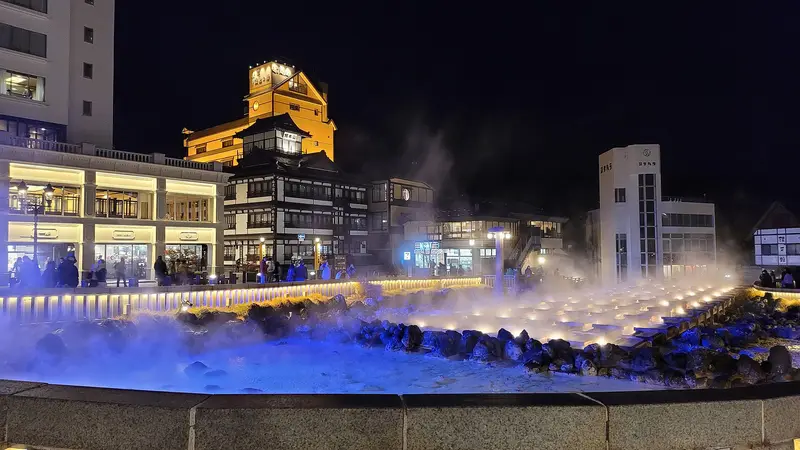
Seven are at hot-spring town stations. Arima Onsen Kotori in Hyogo is about nine minutes from Arima Onsen Station; Kinosaki Onsen Yukura, also in Hyogo, about five from Kinosaki Onsen Station. In Kanagawa, LUX HAKONE YUMOTO is about 13 minutes from Hakone-Yumoto Station and MONS GORA about three from Kami-Gora on the Hakone Tozan cable car. Matsue Biyori in Shimane is about three minutes from Matsue Shinjiko Onsen Station. Rakuten STAY VILLA Kinugawa Riverside in Tochigi and Yufuin Onsen Glamping Kaze no Hibiki in Oita follow the same shape.
The rest cluster at seaside resort stations. 3rd HOUSE Inamuragasaki in Kanagawa is about three minutes from Inamuragasaki on the Enoden; R.KAMAKURA about four from Enoshima Station and about four from the beach. wanderlust, AOSHIMA in Miyazaki is about four minutes from JR Aoshima Station, and Ai in Shizuoka about eight from Izukyu-Shimoda.
The shortest is CODE ROOMS ITOSHIMA in Fukuoka, about two minutes from Shikanoya Station on the JR Chikuhi line. Across the 40 that give a figure the median is 10.5 minutes, with nine within five and twenty within ten.
So it is not that private stays were built next to stations. They appear where a town already stood at the station: hot-spring streets, and coastlines people reach by train. Everywhere else, the station was never within walking distance to begin with.
The 78 that start at an airport, and the 12 that start at a port
Seventy-eight access lines begin at an airport. Forty-eight of those are in Okinawa, followed by Kagoshima with six, and Kumamoto and Hokkaido with four each. The median drive from an airport is 30 minutes; the longest is 120.
Bears Stay Kumejima Villa in Okinawa writes the structure twice over.
About 15 minutes by taxi or rental car from Kumejima Airport or Kanegusuku Port. About 35 minutes by air from Naha Airport.
Getting to the starting point takes a 35-minute flight. Before the 15 minutes to the house, there is another leg entirely.
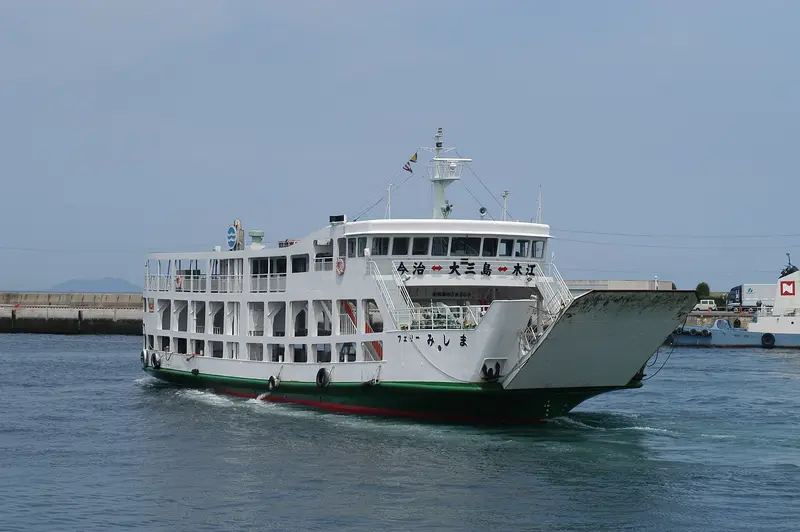
Twelve stays begin at a port: three each in Kagawa and Hiroshima, two in Ehime. GLAMPING SKYMARINE in Hiroshima writes that “Osakikamijima is an island with no bridge to the mainland; about 11 minutes by fast boat from Takehara Port”.
And GLAMPROOK Shimanami in Ehime carries a line found nowhere else in the 654.
Private cars cannot enter Umashima. Cross from the guest car park at Imabari Port by free shuttle vehicle or pleasure boat (reservation required).
A stay you cannot drive to. Islands like this are the subject of staying on an island.
The 147 whose starting point is “Tokyo”
Rather than a station or an interchange, 147 stays use the name of a city: 53 villas and 94 glamping sites.
Hakone Kairai in Kanagawa gives “about 70 minutes by car from Tokyo”. Aso Sweet in Kumamoto gives “about 30 minutes by car from central Kumamoto”. asa YATSUGATAKE in Nagano writes both, “about 15 minutes by car from JR Chino Station; about two hours from Shinjuku on the Azusa limited express”.
A city name is not a point on a map. It is an assumption about where the reader lives. A property that writes “70 minutes from Tokyo” is writing for someone coming from Tokyo.
Sixty-one can be reached on foot or by shuttle
Adding it up: 41 within walking distance of a station, plus 21 publishing a shuttle from a station or airport. Only one property, Kotori in Hyogo, is in both. That makes 61, or 9.3% of the 654.
The remaining 597 need a car or a taxi. The 21 with a shuttle are listed by region in private stays you can reach without a car. If you are driving, the next things that matter are the space counts in enough beds, not enough parking and the cut-off times in where do you collect the key.
What this counts, and what it does not
The denominator is 654 listings (published, duplicates excluded): 321 villas and 333 glamping sites. 538 publish an access line; the other 120 (71 villas, 49 glamping sites) give only an address.
The reference points were read mechanically from access lines based on official information. Nothing was measured on the ground, so a published travel time is not necessarily accurate. “Walkable from a station” excludes lines that route through a bus (for example “bus from X Station, then five minutes on foot”).
Glamping access lines come through a different data pipeline from villa ones, so they are not written at a consistent level of detail. Read the comparisons by type as correspondingly coarse.
Transport also changes. Shuttles and services alike; check the official site before booking.
Read the first line and stop
Whatever sits at the head of the access line tells you how the property has imagined you.
An interchange means a car. An airport means a flight and a rental car. A port means a boat. A city name means someone getting onto a motorway there. And a station means it might be possible by train. Might.
After that, look for the word walk. Those four letters are what narrow 654 stays down to 41.
An address says where a property is. An access line says who it thinks you are.
FAQ
- Are there private stays you can walk to from a station?
- Yes, but not many. Of the 654 stays listed on Tomaribi, 41 state a walk from the station: 21 villas and 20 glamping sites. Across the 40 that give a figure the median is 10.5 minutes, with nine of them within five. The shortest is CODE ROOMS ITOSHIMA in Fukuoka, about two minutes from Shikanoya Station.
- Do I need a car?
- At most of them, yes. The 41 within walking distance of a station plus the 21 that publish a shuttle from a station or airport (one property counts in both) come to 61, about 9% of the total. The remaining 597 assume a car or a taxi.
- What does "20 minutes from the interchange" actually tell me?
- That the property expects you to arrive by car. A motorway interchange is the most common opening in an access line, used by 197 stays, of which 153 are glamping sites. The median drive from an interchange is 15 minutes.
- If a station is mentioned, can I get there by train?
- Not necessarily. A station appears in 318 access lines, but only 41 of them say you can walk it. For the rest the station is where you change to a car or a taxi, a median of 10 minutes away.
- What should I check before booking?
- Read the first thing in the access line. An interchange means a car, an airport means a flight and a rental car, a port means a boat. Then look for the word walk. That is what narrows 654 stays down to 41.
Stays in this article
 Official site
ItoshimaFukuoka
CODE ROOMS ITOSHIMA
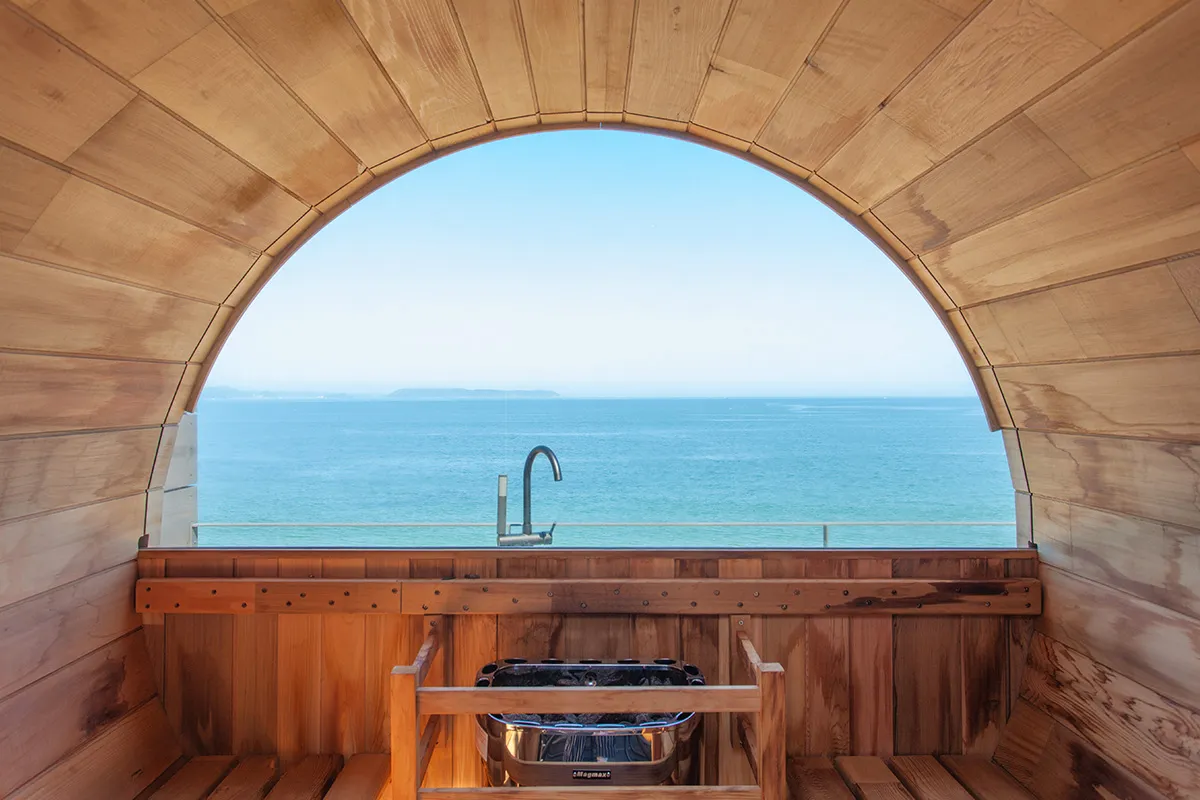
A two-storey whole-house villa at Nijo-Shikaka in Itoshima, right on the water, with sea-facing terraces on both floors and a barrel sauna and cold plunge that look out at the sea. Sleeps eight.
2 bd

MatsueShimane
松江日和(まつえびより)
A whole-house stay three minutes' walk from Matsue Shinjiko Onsen Station, 140 square metres with a courtyard and a living room in a converted storehouse. Up to two dogs may stay.

HakoneKanagawa
MONS GORA(モンス強羅)
Two 200 sqm villas that opened in Gora, Hakone, in 2023. A hinoki semi-open-air bath runs free-flowing water from Owakudani, there is a wood stove, and SOLIS adds a sauna. Inside are an 85-inch screen and an eight-seat oak dining table.
2 bd1 ba

Kinosaki OnsenHyogo
城崎温泉一棟貸しの宿 ゆっ蔵(ゆっくら)
A whole-house rental at Kinosaki Onsen, converted from a sake merchant's storehouse dating to the Meiji era. There is no bath in the house; the seven public baths around town are the point. Five minutes on foot from Kinosaki-Onsen Station.
1 bd1 ba

Kumejima IslandOkinawa
ベアーズステイ久米島ヴィラ
Three whole-house villas on Kumejima. Each is a 91 sqm three-bedroom layout with a kitchen and washer-dryer, and Eef Beach is about four minutes away by car.
3 bd1 ba