Home /Guides /Where in Japan the Private Stays Actually Are: A Map of 654 Listings
Where in Japan the Private Stays Actually Are: A Map of 654 Listings
Tokyo has three private stays. A prefecture of 14 million people, three.
And all three sit at its western edge.
Counting the 654 stays listed on Tomaribi produces a map like that. A slightly different map than the one you had in mind.
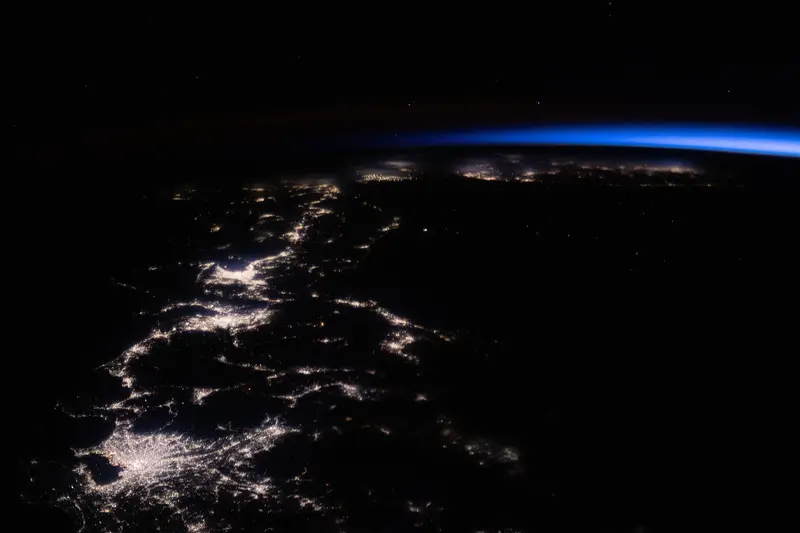
All 47 prefectures have some, 25-fold apart
The 654 are spread across every one of the 47 prefectures. Not one is empty.
They are not spread evenly. Okinawa tops the list with 50 and Hyogo follows with 47; Aomori, at the bottom, has two. That is a 25-fold difference in density. “You can stay somewhere private anywhere in Japan” is true; “you can choose just as freely anywhere in Japan” is not.
Forty of Hyogo’s fifty are on Awaji Island
The top twelve prefectures:
| Prefecture | Listings |
|---|---|
| Okinawa | 50 |
| Hyogo | 47 |
| Chiba | 41 |
| Yamanashi | 41 |
| Kanagawa | 32 |
| Shizuoka | 30 |
| Nagano | 31 |
| Kyoto | 24 |
| Mie | 23 |
| Hiroshima | 21 |
| Shiga | 22 |
| Tochigi | 21 |
If “Hyogo, 47” made you pause, good instinct. Thirty-six of them are in Awaji, Sumoto and Minamiawaji, all on Awaji Island, not in Kobe or Himeji. Likewise, 30 of Yamanashi’s 41 sit in Fujikawaguchiko, Yamanakako, Oshino, Narusawa and Fujiyoshida, not in Kofu.
Prefecture figures are usually the figures for a single area. Broken apart: 26 of Okinawa’s 50 are on outer islands such as Miyakojima, Ishigaki and Kumejima; 17 of Chiba’s 41 run from Minamiboso down to Onjuku, with another 10 along the Kujukuri coast; 16 of Shizuoka’s 30 are on the Izu peninsula and in Atami; 14 of Nagano’s 31 are in Karuizawa and Hakuba.
From which two patterns emerge. One is the holiday-house belt two to three hours by car from a big city: Boso, the Fuji Five Lakes, Izu, Karuizawa, Nasu. The other is islands and resorts: Awaji, the Okinawan islands. The first grew because it is easy to reach; the second survived because it is not. Opposite causes, and yet they end up next to each other at the top of the same table.
By region, three of them hold 60%
Grouped by region: Kinki 146 (22%), Chubu 143 (22%), Kanto 130 (20%), Kyushu 77 (12%), Okinawa 50 (8%), Chugoku 44 (7%), Tohoku 28 (4%), Shikoku 24 (4%), Hokkaido 16 (2%).
Kanto, Chubu and Kinki together account for more than 60%. Stays clustering near where people live is natural enough, but measured against its area, Hokkaido’s 16 is very thin. Kyushu’s 77 looks like the result of hot spring towns and new glamping sites arriving at once.
The scarce prefectures reward you more
At the other end: Aomori 2, Tokyo and Shimane 3 each, Nagasaki and Toyama 4 each. Then Yamagata, Iwate, Akita, Ehime, Miyagi, Saga, Ishikawa and Kagawa with five apiece.
Few options means exactly that: fix your dates and party size first and you will usually find them taken. Turn it around, though, and it also means very few people are staying privately in that prefecture. The emptiness is not confined to the inside of the house.
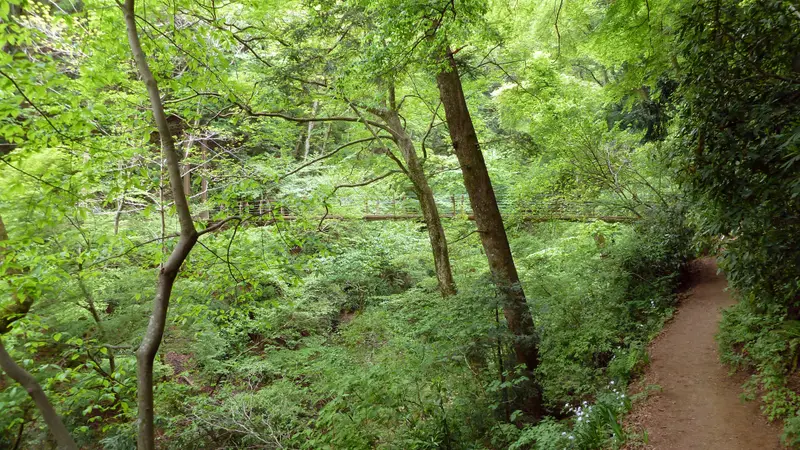
All three Tokyo stays are in the western mountains
Back to Tokyo. The three are these.
THEATER1 in Hinohara is a whole-house rental with a 100-inch cinema screen. KEIKOKU GLAMPING TENT, also in Hinohara and beside a gorge, is two independent private villas with a wood-fired sauna looking onto the stream. Woodland Bothy takes one group a day in the mountains of Yozawa, Akiruno, twenty minutes up a mountain path from the car park.
So it is not that Tokyo has no private stays. Tokyo’s are in its mountains. About an hour from the centre, still inside the same prefecture on paper, you come out on the side of gorges and hiking paths.
What these three suggest is that a private stay is conditioned not on distance from the city but on a change in terrain.
Cross a prefectural border and the view changes
In practice, then, stop searching by prefecture.
Tokyo has three, but Chiba’s 41, Yamanashi’s 41 and Kanagawa’s 32 are all within two to three hours of the centre. Shimane may have three, but neighbouring Tottori has seven and Hiroshima 21. Toyama’s four sit next to Nagano’s 31 and Gifu’s 12.
Administrative boundaries have nothing to do with where stays are. Drawing a circle by travel time produces a map far closer to your actual options, which is presumably why the map search and the area guide exist.
A high count is not a measure of quality
One last thing. All of this has been about counts, and a prefecture with more listings is not a better prefecture. Thirty-six on Awaji Island means it is easy to choose; it says nothing about whether any one of them is good. One of Hokkaido’s sixteen turning out to be the best night of the trip is entirely ordinary.
Numbers describe only the width of the choice. Where it is wide, narrow by conditions; where it is narrow, drop conditions and move your dates. Looking at the map first tells you which of the two fights you are in.
FAQ
- Is there any prefecture with no private stays?
- No. All 654 listings on Tomaribi are spread across every one of Japan's 47 prefectures. The density gap is wide, though: Okinawa leads with 50 and Hyogo follows with 47, while Aomori, the lowest, has two.
- Are there private stays in Tokyo?
- Yes, three of them, and none are anywhere near the centre. THEATER1 and KEIKOKU GLAMPING TENT are in Hinohara village, and Woodland Bothy is in Akiruno, all in the western mountains of the metropolis.
- What if the prefecture I want has almost nothing?
- Widen the search to the neighbouring prefectures and the picture changes. Tokyo has three, but Chiba's 41, Yamanashi's 41 and Kanagawa's 32 are all within two to three hours of the city.
