Home /Guides /Sleeping in a Kominka: Renting a Restored Japanese House Whole
Sleeping in a Kominka: Renting a Restored Japanese House Whole
Step into an old house and the sound changes first. The floor gives a faint creak, and with the ceiling that high, your voice comes back a beat late. The posts are polished only where hands have rested on them for decades, and the beams are thicker than they need to be. If a newly built private villa is a neatly finished space, a restored kominka is a space someone has already lived in for a long time. The same single night settles in the body differently.
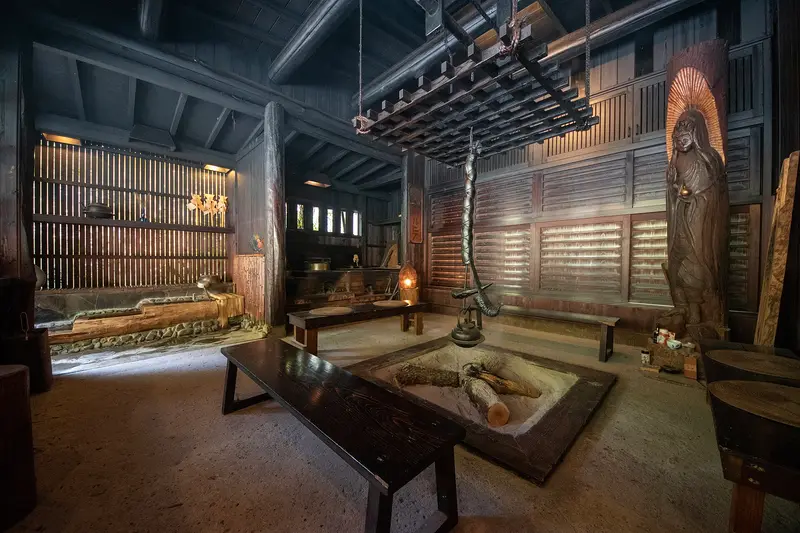
A kominka stay is not simply an old house
People brace themselves when they hear “old Japanese house”. Will it be cold? Will the bathroom be awkward? Is it really workable with family? In practice, almost every house restored far enough to take guests has had its insides replaced. The visible parts, the posts, beams and joinery, stay; insulation, plumbing and climate control are brought up to current standards. The building may be decades old, but the air conditioning works when you go to bed.
What the owners choose to keep is what gives each stay its character. One house turns its earthen floor into a living hall, another moves in a sunken hearth taken from a different building, a third restores an entire hamlet and hands each house to a different architect. The word kominka covers all of them, yet on arrival the design thinking is nothing alike.
Among the stays listed on Tomaribi, the ones where you sleep in the kominka itself are still few. These are those few.
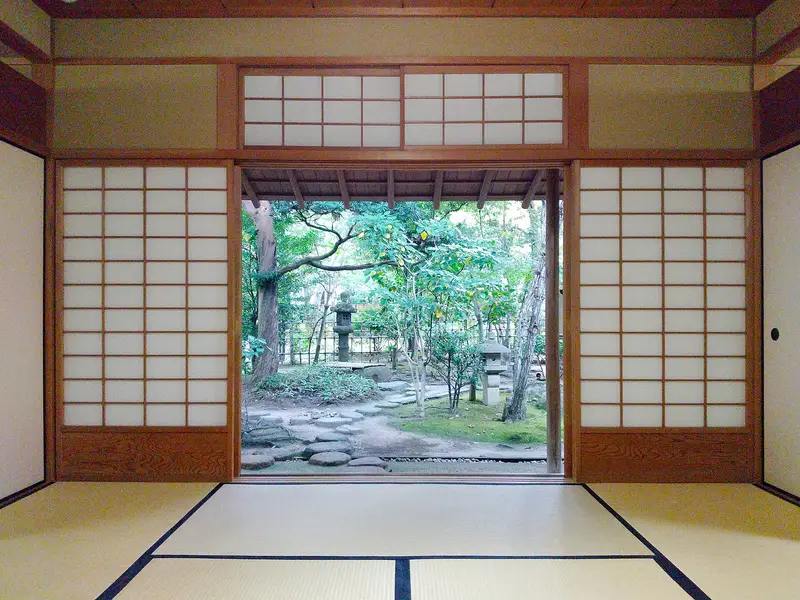
A kominka with hot spring water: Itsukiri

About 90 minutes by car from central Tokyo, spread across the satoyama hills of Isumi in Chiba, this resort has a hot spring bath in every room. Guests choose between three types, one of which is “kominka”: two restored old houses rented whole. A rare black-water hot spring drawn from 300 metres underground feeds every room, and the second floor of the main house holds an open-air bath, an indoor bath, a sauna and a cold bath. Dinner comes as either an auberge menu built on local Isumi produce or a glamping BBQ available in every room. It sleeps up to ten, rates start around 48,000 yen a night, and some rooms take dogs. It is about 30 minutes from the Ichihara-Tsurumai interchange, with a pickup from JR Ohara Station arranged the day before.
Running a hot spring through an old house is possible precisely because the plumbing was replaced. The weakest point of an old building is filled in with its strongest fixture.
Restoring a whole hamlet: glaminka SAYO

In the mountains of Sayo in western Hyogo, a single hamlet has been restored whole as a kominka glamping site. Teams of architects from across Japan each designed one of the four buildings, HAZ, handi, YOUBI and maenomeri, so no two spaces are alike. A central building at the heart of the hamlet handles check-in and hosts events. Dinner is included and bringing your own food and drink is free; it takes four to ten guests, with check-in at 16:00 and check-out at 10:30. It is about 15 minutes by car from the Oohara interchange on the Tottori Expressway, from 38,600 yen. Past the village a clear blue stream appears, and after dark only the hamlet’s own lights remain, leaving a sky where the Milky Way is visible without a telescope.
Restoring one house and restoring a hamlet are different propositions once you step outside. Here the roofs beyond your window come from the same era.
A kominka by the sea: La-gom

An ocean glamping site opened in 2022 on the shore of Inatori in Higashiizu, a port town on the east coast of the Izu Peninsula. All three buildings face the sea and are taken whole by one group; alongside two dome tents stands “mukaian”, a roughly 100 sqm villa converted from an old house, limited to one group per day and sleeping two to six. Each building has its own view terrace and a covered, all-weather BBQ space usable in the rain. Guests receive a free bathing pass for Inatori Onsen’s Senoumi or Ginsuiso, and the attached cafe serves splendid alfonsino landed at Inatori port. It is about ten minutes from Izukyu Inatori Station.
Kominka are associated with the mountains, but port towns have old houses too. Having 100 square metres to yourself in the sea air is a different luxury from a dome tent.
Somewhere you can choose how to sleep: CYMBALS

An experience-led resort that opened in April 2025 next to the Iwaizumi roadside station in Iwate. Its accommodation is unusually varied, and among it is “Renoveco”, a renovated kominka let as a whole house on one or two floors. The same site also lets you sleep in the preserved sleeping cars of the Nihonkai, the blue train that once ran between Osaka and Aomori, with the option of taking a whole carriage. Meals are a chef’s course built on Ryusendo black pork, Iwate shorthorn beef and local char and trout, reserved at least three days ahead. Buggies, log splitting, bonfires and a private bath drawn from Ryusendo’s water round out the stay.
Not a stay that is only a kominka, but one where a kominka is among the options. For a group with mixed tastes, that shape works.
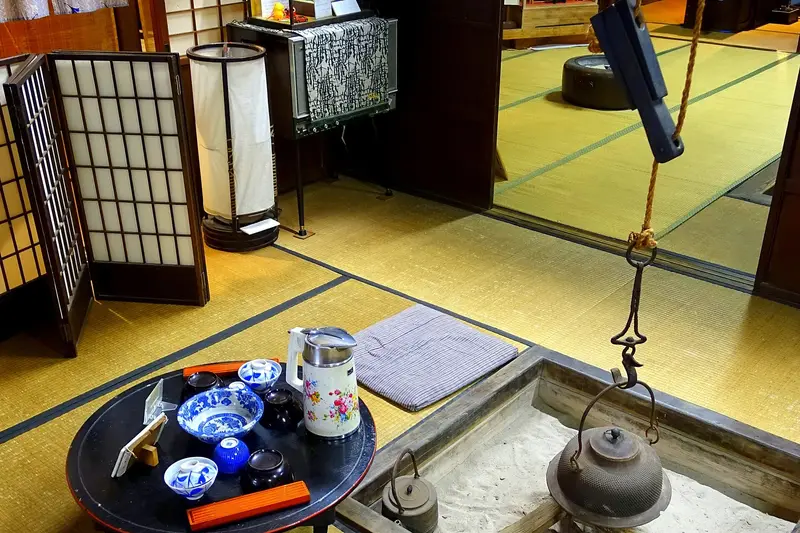
Carrying over the timber rather than the house
When a house itself cannot be saved, its parts can move into the next building. Ichirino Kogen Hotel Roan in Hakusan, Ishikawa, describes itself as an “irori auberge”, serving food around a sunken hearth relocated from a house more than a century old. A5 Hida and Noto wagyu, bear, deer and boar game from a butcher ten minutes away, and organic vegetables from the foot of Hakusan are grilled over charcoal. The private rock open-air bath and all-cypress bath are heated spring water from Hakusan rather than a hot spring.
Itakura-an HAKU Hida Takayama in Kokufu, Takayama, Gifu is a one-group-per-day whole-house rental built as a modern space from old timber gathered from kominka. Large windows take in a panorama of rice fields, and rates start around 28,000 yen a night. The form of the house is new; the wood you touch is old.
Worth checking before you book
A few things about a kominka stay are hard to read from photographs.
- What the heating and cooling actually are. Even after restoration, a house with high ceilings and large openings takes time to warm. Where there is a sunken hearth or a wood stove, tending the fire becomes the evening itself.
- Steps and stairs. Old houses often keep their raised thresholds and entrance steps. Worth confirming if you are travelling with small children or older family.
- How sound carries. In a house of wood and paper, the partitions between rooms are thin. It is a real factor in deciding whether two households take separate buildings.
- Fire and smoke. Where a hearth or charcoal is used, the smell stays in your clothes. If work or guests follow the next day, pack an extra change.
None of these are faults. They are the character of the thing. You are choosing a house that kept what newer buildings have done away with.
FAQ
- What is a kominka stay?
- Kominka stays are old Japanese houses converted for overnight guests. Most keep the visible timber frame of posts and beams while bringing insulation, plumbing and climate control up to modern standards, and they operate either as whole-house rentals or as one building within a glamping property.
- Can I rent a kominka as a whole house?
- Yes. Itsukiri in Isumi, Chiba has two rooms that are restored kominka rented out whole; La-gom in Higashiizu, Shizuoka has a roughly 100 sqm kominka villa taken by one group per day; and CYMBALS in Iwaizumi, Iwate has a renovated kominka let as a whole house.
- Are kominka stays cold?
- It depends on the property. Most add insulation and air conditioning during the restoration, and some have a sunken hearth or a wood stove. Houses with high ceilings and large openings take longer to warm up, so it is worth checking what heating is provided on the official website.
