Home /Guides /Echizen-gani and Matsuba-gani Are the Same Crab: What Decides a Local Speciality Is Not the Prefecture
Echizen-gani and Matsuba-gani Are the Same Crab: What Decides a Local Speciality Is Not the Prefecture
Once the stay is booked, the next thing you look up is what the place has.
Tomaribi records local specialities for 85 areas. Three hundred and forty-two of them.
Four per area, 342 in all
Every one of the 85 areas has entries, 342 items in total. That is 4.0 per area, each with a short note.
Count the distinct names, though, and there are only 283. The difference is the same name turning up in another area.
Three in ten are also somewhere else’s speciality
Forty-two names appear in more than one area. Counted as items that is 101 of the 342, or 30%.
Most repeated first:
| Speciality | Areas | Prefectures |
|---|---|---|
| Apples | 4 | Nagano, Aomori, Gunma |
| Spiny lobster | 4 | Chiba, Mie, Shizuoka, Wakayama |
| Shinshu soba | 4 | Nagano |
| Octopus | 3 | Kumamoto, Aichi, Hiroshima/Ehime |
| Echizen-gani | 3 | Fukui |
| Winter yellowtail | 3 | Ishikawa, Toyama, Niigata |
| Sweet shrimp | 3 | Fukui, Hokkaido |
| Whitebait | 3 | Kanagawa, Ibaraki |
| Highland vegetables | 3 | Nagano, Tochigi |
| Runner beans | 3 | Nagano, Gunma |
| Onsen manju | 3 | Kanagawa, Shizuoka, Gunma |
Of the 42, 19 cross prefecture lines and 23 stay inside one prefecture. Those are two different stories, so we will take them in turn.
The Onomichi and Shimanami Kaido area straddles Hiroshima and Ehime, which is why octopus covers four prefectures across three areas.
One crab had become four specialities
Nine items have crab in the name. Read the notes and something curious appears.
- Echizen-gani (Echizen coast, Fukui): “the snow crab that defines the winter Echizen coast, rich in both meat and roe”
- Echizen-gani (Tojinbo, Fukui): “the male snow crab caught in the Sea of Japan”
- Matsuba-gani (Kinosaki Onsen, Hyogo): “the premium snow crab that defines winter in Tajima”
- Matsuba-gani (Kyotango, Kyoto): “the snow crab that defines the winter Sea of Japan, king of Tango’s flavours”
- Taiza-gani (Amanohashidate, Kyoto): “a brand of Matsuba-gani landed in Tango. The phantom crab”
- Seiko-gani (Tojinbo, Fukui): “the female Echizen-gani, rich in inner and outer roe”
The same snow crab is Echizen-gani in Fukui and Matsuba-gani in Hyogo and Kyoto, and the ones landed at Taiza port become Taiza-gani. The females alone get a separate name.
Of the nine, only the giant spider crab of Nishi-Izu in Shizuoka (“the world’s largest deep-sea crab”) is a different animal.
Which is to say that the name belongs not to the animal but to the port it was landed at. Taiza-gani being described as “a brand of Matsuba-gani” says it best: there is a brand inside the brand.
What decides it is the current and the altitude
Look at the 19 that cross prefectures and the arrangement has a reason.
Spiny lobster, four areas. Tateyama and Minami-Boso in Chiba (“among the country’s largest landings, the Boshu spiny lobster”), Ise-Shima in Mie (“the premium prawn of the Shima sea”), Shimoda and Minami-Izu in Shizuoka (“an autumn and winter taste from the Minami-Izu rocks”), Nanki-Shirahama in Wakayama (“a premium lobster from the Kishu rocks”). All four are Pacific rocky shores where the Kuroshio current runs.
Winter yellowtail, three areas. Noto in Ishikawa, Tateyama and Toyama, Sado in Niigata. Three prefectures ringing Toyama Bay, each noted as “fattening in the winter Sea of Japan”.
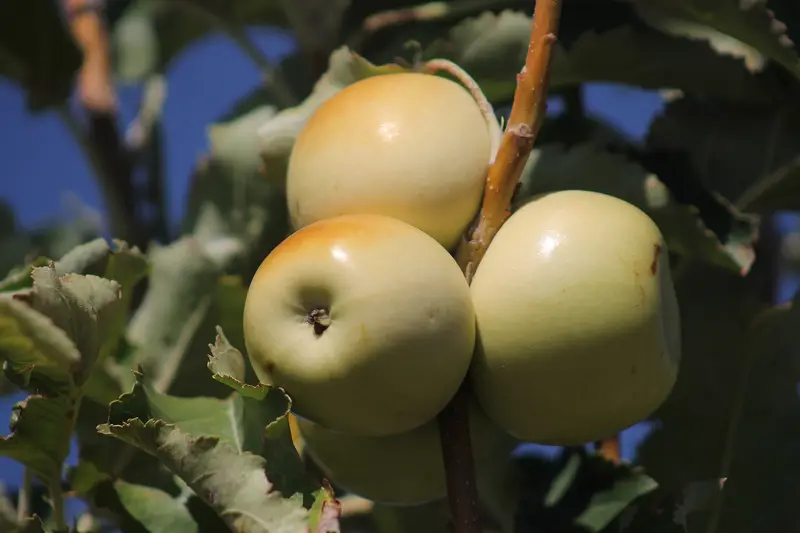
Apples, four areas. Azumino in Nagano (“sunshine and swings in temperature”), Fukaura and Kuroishi in Aomori, Minakami in Gunma (“orchards high on the flank of Tanigawa-dake”). Where altitude and temperature range line up, apples appear regardless of the prefecture.
In what decides the facilities is the land we found no pools in Hokkaido and no onsen in Okinawa. Food works the same way. What decides a speciality is not an administrative line but a current, an altitude and a soil.
Inside one prefecture, specialities are shared
The 23 that repeat within a single prefecture mean something else.
- Shinshu soba is in all four Nagano areas (Azumino, Hakuba, Karuizawa, Yatsugatake)
- Echizen-gani is in all three Fukui areas (Echizen coast, Tojinbo, Wakasa-Obama)
- White shrimp and firefly squid are in both Toyama areas (Himi, Tateyama)
- Taiza-gani and rock oysters are in both Kyoto areas (Amanohashidate, Kyotango)
- Potatoes and dairy are in both Hokkaido areas (Biei, Niseko)
This is not terrain; it is us having divided the areas finely. There are no borders inside a prefecture, so wherever you stay in Nagano, soba is the speciality.
Put the other way round, if you are after one speciality you are not limited to one area. You need not reach the Echizen coast for Echizen-gani: all three Fukui areas list it.
Only 19% say when
Sixty-four of the 342 notes (19%) mention a season.
| Season | Items |
|---|---|
| Winter | 26 |
| Summer | 17 |
| Autumn | 12 |
| Spring | 9 |
Winter leads, which follows from nine crabs and three winter yellowtail. It also means winter stays are the easiest to choose by what you will eat.
For the middle of October, the entries come to these.
- Mantis shrimp in Otaru: “an autumn taste from Ishikari Bay”
- Okesa persimmons on Sado: “seedless, a Sado speciality, meltingly sweet, a taste of autumn”
- Nara persimmons in Yoshino and Kurotaki: “from Nara, one of the country’s great producers”
- Apples in Minakami: “and in autumn you can pick them yourself”
- Tsumagoi highland cabbage in Kita-Karuizawa: “summer-autumn cabbage grown above a thousand metres”
- Spiny lobster in Shimoda and Minami-Izu: “an autumn and winter taste”
The other 81% say nothing about season. Whether that means available year-round or simply not worth writing down, the notes do not tell us.
What you can buy, and what you eat out
Of the 321 private villas, 221 have a kitchen. So buying the local speciality and cooking it is a trip you can take.
The specialities come in three kinds, though.
- Ingredients you can buy and cook: kuruma prawns, sea urchin, octopus, apples, Awaji onions, fresh wasabi
- Dishes you eat out: keihan (Amami), takanameshi and dago-jiru (Aso), Asuka-nabe (Asuka), persimmon-leaf sushi (Yoshino), Shinshu soba, Takayama ramen
- Things you take home: brown-sugar shochu, carbonated senbei (Arima), onsen manju, Shinshu miso, Nara pickles
If you mean to cook, you are choosing an area whose speciality is an ingredient. Where soba or a rice bowl or a hotpot is the local name, the kitchen may go unused.
And one night is only 19 hours. Arrive at three, go out for the shopping, and you get two meals: dinner and breakfast. Four specialities in an area does not mean four meals. Unless, as in the trip that starts with the shopping, the buying itself is the point.
You are eating the name of a port
You eat snow crab and say you ate Echizen-gani.
A speciality turned out to be an animal with a place name stuck to it. The next prefecture lands the same thing. It lands it, but the name is different, so it feels like something else.
I would not call that a mistake. The same crab, landed at a different port, leaves a different memory of where you were. Matsuba-gani at Kinosaki and Echizen-gani on the Echizen coast are one crab and two journeys.
There are 342 specialities across 85 areas not because there are 342 different animals, but because there are 342 different places.
FAQ
- How many specialities are recorded per area?
- All 85 areas have an entry, 342 items in total, an average of 4.0 per area, each with a short note. But there are only 283 distinct names: 42 of them appear in more than one area.
- Are Echizen-gani and Matsuba-gani different crabs?
- Both are snow crab. Our own notes say so: Echizen-gani is 'the male snow crab caught in the Sea of Japan' and Matsuba-gani is 'the snow crab that defines the winter Sea of Japan'. Taiza-gani in Kyoto is described as 'a brand of Matsuba-gani', and Seiko-gani in Fukui as 'the female Echizen-gani'. One animal becomes four specialities, by port and by sex.
- Why does the same speciality appear in several areas?
- Because prefecture borders are not what decides it. Of the 42 repeated names, 19 cross prefecture lines. Spiny lobster appears in four areas across Chiba, Mie, Shizuoka and Wakayama; winter yellowtail in three across Ishikawa, Toyama and Niigata; apples in four across Nagano, Aomori and Gunma. A rocky shore in the Kuroshio current, the rim of Toyama Bay, an orchard at altitude: the terrain decides.
- Where can I find out when something is in season?
- 64 of the 342 notes (19%) mention a season: 26 winter, 17 summer, 12 autumn, nine spring. Winter dominates, with the crabs and the yellowtail. For mid-October there is mantis shrimp in Otaru ('an autumn taste from Ishikari Bay'), Okesa persimmons on Sado, Nara persimmons, apples in Minakami, Tsumagoi highland cabbage, and spiny lobster in Minami-Izu ('an autumn and winter taste').
- Can I cook the local speciality in the villa kitchen?
- It depends what kind it is. 221 of the 321 private villas have a kitchen, but the specialities mix ingredients you can buy and cook (kuruma prawns, sea urchin, apples), dishes you eat out (keihan, takanameshi, dago-jiru, soba) and things you take home (brown-sugar shochu, onsen manju, miso). If you plan to cook, you are choosing an area whose speciality is an ingredient.
Stays in this article

Echizen CoastFukui
UMITOMA OCEAN VIEW RESORT ECHIZEN
Private villas on the Echizen coast where every unit faces the ocean. Two are PRIVATE VILLA and three CAMP HOTEL, each with a sea-facing jacuzzi and a private sauna.

Kinosaki OnsenHyogo
城崎温泉一棟貸しの宿 ゆっ蔵(ゆっくら)
A whole-house rental at Kinosaki Onsen, converted from a sake merchant's storehouse dating to the Meiji era. There is no bath in the house; the seven public baths around town are the point. Five minutes on foot from Kinosaki-Onsen Station.
1 bd1 ba

KyotangoKyoto
京・Tango Resort sea side villa umiharuka(海遥)
A whole-house villa on the shore at Taiza in Kyotango, opened in November 2024. It has baths of undiluted Kyotango hot-spring water, a sauna for two, and a dining table with a smokeless roaster built in.
4 bd

AzuminoNagano
三角屋根の貸別荘 Villa Yoshino(安曇野)
Gable-roofed rental houses in the forest at Ariake in Azumino. Four houses across three types each have a private bath fed straight from a North Alps source, and every terrace has a built-in BBQ grill.
MinakamiGunma
MOOSKA DE STUBEN(ムースカ・デ・シュトゥーベン)
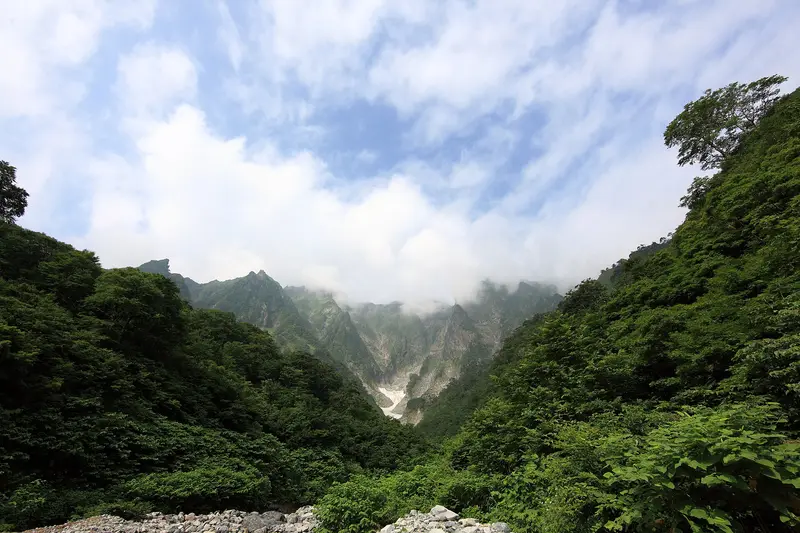
A private glamping villa in Minakami with Mt. Tanigawa in view, its 1,000-square-metre grounds given over to one group a day, with a Finnish wood-fired sauna. Sleeps eight.