Home /Guides /No Pools in Hokkaido, No Hot Springs in Okinawa
No Pools in Hokkaido, No Hot Springs in Okinawa
Hokkaido has 16 listings. None of them has a pool.
Okinawa has 50. None of them has a hot spring.
Those two sentences are the same observation from opposite ends.
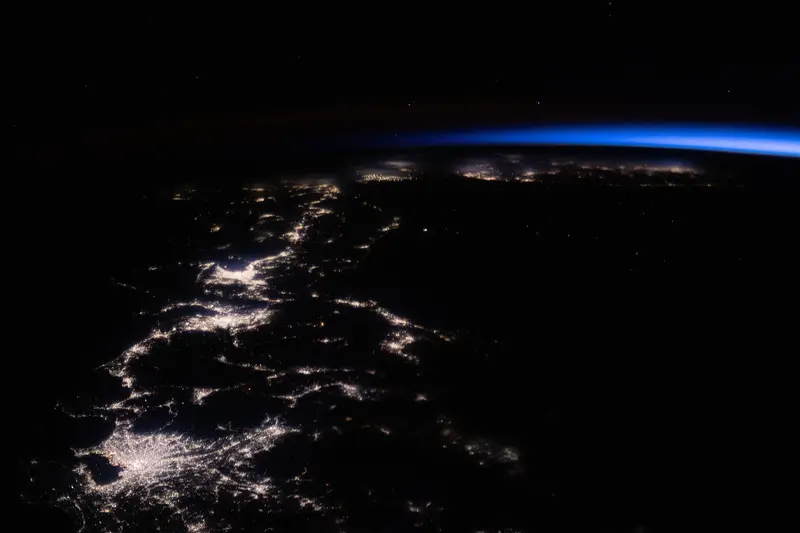
Lined up north to south
Splitting all 654 listings by region and taking the share with each facility, in order from north to south:
| Region | Stays | Pool | Hot spring | Open-air bath | Fireplace | Sauna |
|---|---|---|---|---|---|---|
| Hokkaido | 16 | 0% | 12% | 0% | 44% | 50% |
| Tohoku | 28 | 14% | 43% | 32% | 18% | 68% |
| Kanto | 130 | 32% | 31% | 23% | 16% | 68% |
| Chubu | 143 | 20% | 31% | 28% | 22% | 59% |
| Kinki | 146 | 46% | 45% | 24% | 10% | 58% |
| Chugoku | 44 | 25% | 7% | 20% | 11% | 64% |
| Shikoku | 24 | 17% | 17% | 29% | 12% | 46% |
| Kyushu | 77 | 22% | 31% | 19% | 14% | 64% |
| Okinawa | 50 | 84% | 0% | 2% | 2% | 54% |
| National | 654 | 33% | 30% | 22% | 15% | 61% |
Take only the top and bottom rows. Hokkaido: pools 0%, fireplaces 44%. Okinawa: pools 84%, fireplaces 2%. The numbers have swapped places.
Kitchens go to the villa, the big bath to glamping explained facility differences through the shape of the building. Here a second line can be drawn.
Fireplaces map the cold
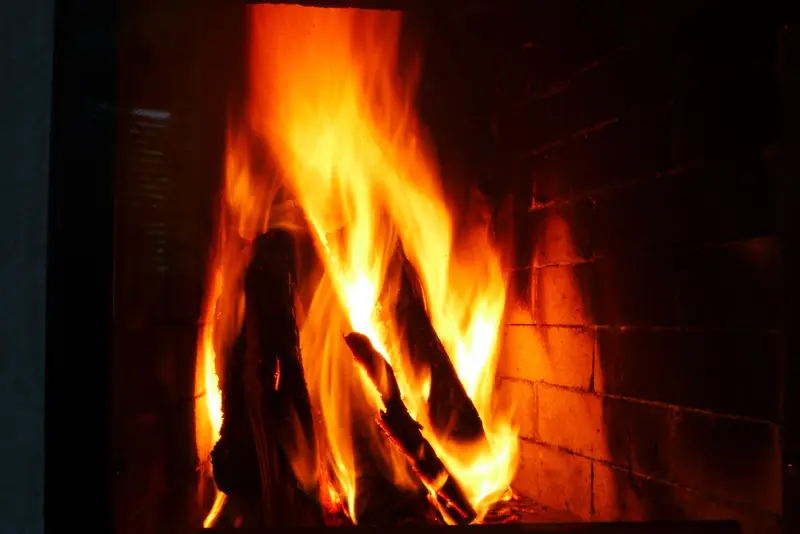
Rank prefectures by the share with a fireplace or wood stove and the order is simply the order of cold.
Hokkaido leads with 7 of 16, or 44%. Nagano follows with 10 of 31 (32%), Yamanashi 11 of 41 (27%), Gifu 3 of 12 (25%). The national average is 15%.
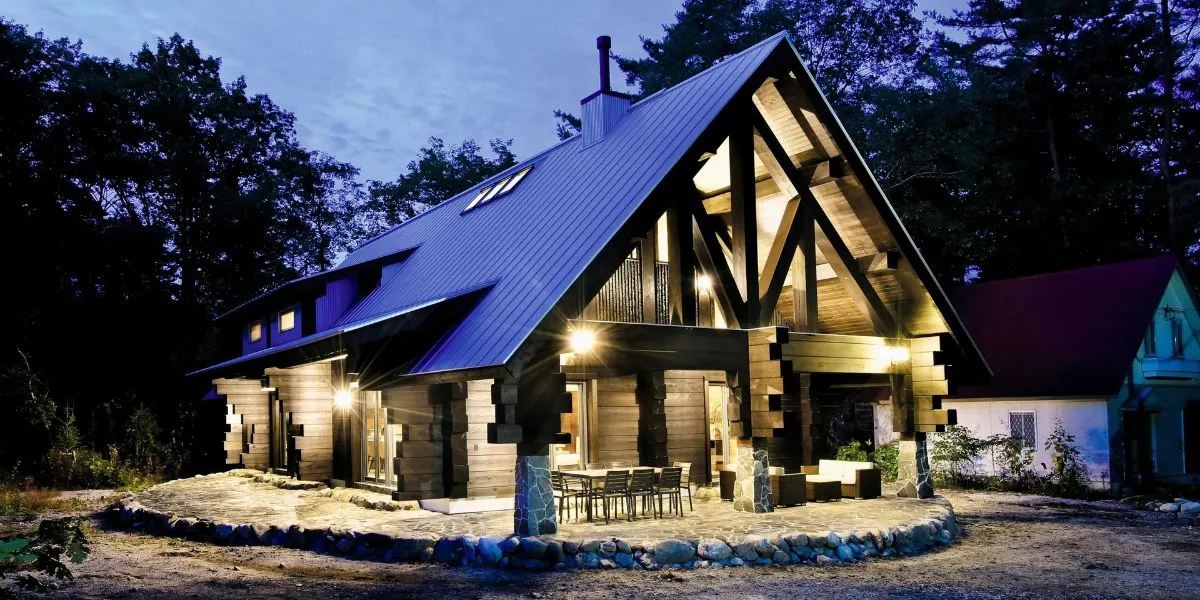
Nagano and Yamanashi rank high on altitude rather than latitude. Fountainhead Hakuba writes of “an open living room with an 8m vaulted ceiling and a skylight, with a fireplace set in so that even the depth of a Hakuba winter stays warm”. Karuizawa House Villa has a wood stove in every unit.
Bottom of the list is Okinawa, with one of 50: Akuna Hama.
A fireplace is not an optional luxury. Where it is cold you need one; where it is warm you do not. That single fact is what 44% and 2% are made of.
Pools map heat, and water
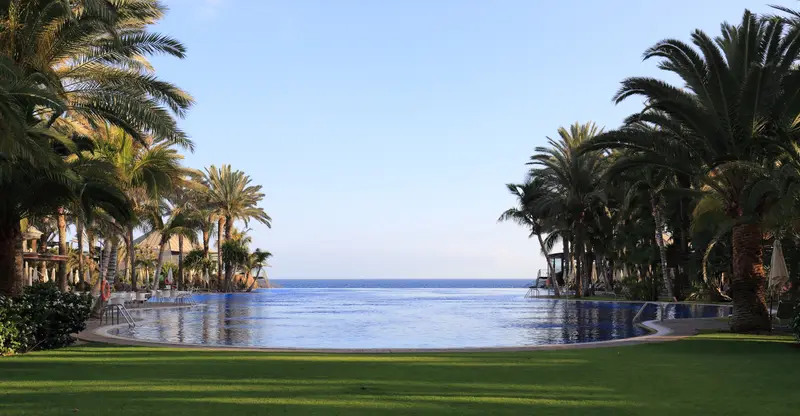
Pools face the other way. Okinawa has 42 of 50, or 84%. Then Wakayama 67%, Kyoto 58%, Shiga 55%, Chiba 51%, Hyogo 49%.
At the bottom: Hokkaido 0%, Gifu 0%, Nagano 3%. The single pool among Nagano’s 31 belongs to Villa Metsä KARUIZAWA, and even that is part of an indoor spa area with a pool, a sauna and an open-air bath.
Something odd surfaces here. Every prefecture at the top already has water you can swim in. Okinawa is the sea; Wakayama is the sea; Kyoto’s fourteen sit along the coast at Amanohashidate and Kyotango; Shiga’s twelve line Lake Biwa; Chiba is Kujukuri and Boso.
Pools are being built beside the sea and the lake.
There is nothing here that proves why. But the sea depends on the season and the weather, small children cannot be left in it, and other people are watching. A private pool requires none of those calculations. A pool by the sea is not a substitute for the sea. It is for what the sea cannot do.
The hot spring refuses to make a map
Line the same regions up for hot springs and nothing resolves. Kinki 45%, Tohoku 43%, Kanto 31%, Chubu 31%, Kyushu 31%, Shikoku 17%, Hokkaido 12%, Chugoku 7%, Okinawa 0%. Neither north to south nor east to west.
That is because a hot spring depends not on whether water surfaces in the region but on whether the property stands in a hot spring town. Hokkaido has no shortage of hot springs, but its 16 listings are mostly villas around Niseko and Lake Toya rather than whole-house rentals in onsen districts. Hence 12%. Chugoku’s 7% reads the same way.
Then Okinawa’s zero. Less a matter of geology than of the format: the private villa there has not grown up alongside hot springs. A pool in every room became the standard instead. Two kinds of stay built around water, with the water completely exchanged.
Three that went against the land
The ones that fall off the map are conspicuous for exactly that reason.
Villa Metsä KARUIZAWA, the only pool in Nagano. Akuna Hama, the only fireplace in Okinawa. And Yuki Suite Kourijima, the only open-air bath in Okinawa, which writes that “each room has either an ocean-view private pool or an open-air bath”. A choice between the two, offered by the only property on Kourijima doing it.
All three do the thing nobody else nearby does. If the land sets the facilities, then going against the land is itself the distinguishing feature.
Only the sauna follows no map
Which leaves the sauna.
Hokkaido 50%, Tohoku 68%, Kanto 68%, Chubu 59%, Kinki 58%, Chugoku 64%, Shikoku 46%, Kyushu 64%, Okinawa 54%. All nine regions fall between 46% and 68%, a spread of 23 points. Against 84 points for pools and 42 for fireplaces, that is close to flat.
There is no north-south slope either. Cold Hokkaido sits at 50%, hot Okinawa at 54%. Practically the same.
The reason is plain enough: a sauna needs no land. A pool needs warmth. A hot spring needs water underground. A fireplace needs a reason to exist. A sauna needs power or wood, and one small building. Put it anywhere and it is the same thing.
Kitchens go to the villa, the big bath to glamping found that the sauna alone came out level between villas and glamping sites, at 61.6% and 59.7%. It does not follow the shape of the building, and it does not follow the land. Part of why saunas spread across Japan this decade is that there was no constraint to follow.
Which is also why the insides vary so much. As 395 have a sauna, 102 mention a cold bath counted, only seven state all four of type, löyly, cold bath and cooling off. No constraint also means no standard.
What this counts, and what it does not
The denominator is 654 listings (published, duplicates excluded). Facility shares come from the tags in the listing data; anything not stated in official information is not counted. “No hot springs in Okinawa” means none of the 50 listings there carries a hot spring tag. It says nothing about hot spring inns in Okinawa, which are not this category of stay.
Hot springs count properties with an in-room, free-flowing or shared hot spring; open-air baths are kept in a separate column, because an open-air bath is not necessarily a hot spring.
Regions come from the prefecture in the listing data. Hokkaido at 16, Shikoku at 24 and Tohoku at 28 are small denominators where a single property moves the share by points. Read them as direction, not measurement.
Facilities also get added. Some properties drill for hot springs; others heat their pools. Check the official site before booking.
Search from the land
Filtering by conditions leaves the destination until last. Pool, then sauna, then whatever survives, and that is where you go.
Seen from the data, the order runs the other way. The land is fixed first, and it fixes what facilities are possible. Search for a pool in Hokkaido and nothing comes back; search for a hot spring in Okinawa and nothing comes back either. Alongside the “conditions work as AND” arithmetic from how many stays survive each filter, one more condition is hiding: where you are going.
If the place is decided, choose from what that place can have. If the facility is decided, you have chosen a place along with it.
The sauna is the one you can decide from either direction.
FAQ
- Where are the stays with pools?
- Okinawa, overwhelmingly. 42 of its 50 listings have a pool, 84%, against a national average of 33%. Then Wakayama at 67%, Kyoto 58%, Shiga 55%, Chiba 51%. At the other end, Hokkaido has none of 16 and Nagano one of 31.
- Are there private stays with a hot spring in Okinawa?
- Not within what Tomaribi lists. Of the 50 in Okinawa, none carry a hot spring tag, whether in-room, free-flowing or shared, and only one has an open-air bath. That says nothing about Okinawa's hot spring inns; it says something about this category of stay.
- Where are the fireplaces and wood stoves?
- In cold places. Hokkaido leads with 7 of 16, or 44%, followed by Nagano at 32%, Yamanashi 27% and Gifu 25%. The national average is 15%, and Okinawa has one of 50, or 2%.
- Don't properties choose their own facilities?
- They choose, but the land sets what they can choose from. A pool is unusable where the water is cold in winter, and a hot spring cannot be piped where none surfaces. A fireplace is pointless somewhere warm. Counted by region, those constraints show up directly in the figures.
- Is any facility independent of the land?
- The sauna. Across the nine regions the rate sits between 46% and 68%, with almost no north-south slope. It needs neither a climate nor a geology, only power or wood and a small building.
Stays in this article

KaruizawaNagano
Villa Metsä KARUIZAWA(ヴィラメッサ軽井沢)
Whole-house villas at Nagakura in Karuizawa, four buildings each with its own concept; the spa areas with pool, sauna and open-air bath are in villas A and C. About an hour from Tokyo by shinkansen.

KaruizawaNagano
軽井沢ハウスヴィラ
A whole-house rental in Karuizawa that began in 2021 under the idea of a retreat for adults. Every house has a wood stove, and they differ by character: one with a sauna, one with a foot bath, one with a hinoki bath, one facing Mount Asama.
4 bd
 Official site
HakubaNagano
Fountainhead Hakuba(ファウンテンヘッド白馬)
A 250 sqm luxury chalet in the forest of Hakuba, let to one group per day. An 8 m atrium with skylights holds a wood stove glazed on three sides, and the interior is built from 80 to 100 year old Japanese cedar and red cedar.
4 bd

Miyakojima IslandOkinawa
CLASS THE FIRST(クラス・ザ・ファースト)宮古島
A zero-energy resort at Gusukube on Miyakojima. Every villa has a private sauna and a generous pool, and the Queen's Villa Suite, 212.94 sqm in total, holds two bedrooms and two bathrooms for up to six guests.
2 bd2 ba

Okinawa Main IslandOkinawa
Yuki Suite Kourijima(ユキスイート古宇利島)
Six free-standing villa suites on Kourijima. The design is cave-like and white, drawn from Santorini, and every room faces the ocean, each with a private pool or an open-air bath.